
Antonio Guillebeau, 17.03.2019
In Britain, two things can only keep getting worse: public health and Brexit. As for the first, there is no end in sight of the tunnel, but for the second, an exit door magically appears to our left side (yes, left side). This month, Jeremy Corbin, leader of the leaderless (and „anti-semitic“?) Labour Party and fan of Latin-american socialism (Maduro sends greetings), announced that his party would support a second referendum. His announcement did not come unexpected, since the support for a second vote is quite big. Also quite recently 8 MPs left the Labour Party, along with 3 other Torys, to create the „Independent Group“ mainly to ask for a second referendum, putting more pressure on Labour’s „stalinist“ leader, as one of them put it.
British politics have rarely seen such a shake up in it’s political landscape, tough it was a necessary wake up call for the two biggest parties in parlamament, considering it’s sluggish behaviour towards Brexit in the last three years. Yes, the Brexit Referendum was 3 years ago and not much has changed… Instead of calming down peoples euphoria/paranoia, Theresa May only worsened everything, literally. After two and a half years of ’negotiations‘ and resignations, she had finally worked out something presentable that could actually be shown to congress. But that was already too late to try yet to make it actually digestable for most MPs. If she tought that they would accept wathever was on the table under some time pressure, she got them wrong.
Oposition came from all sides: The Deal was too Europe-friendly for brexiteers, and at the same time it was too Europe-hostile for remaines. And if we are going into the Irish backstop, May’s Deal will likely be accepted only in the next century. Maybe if Theresa May had asked what MPs wanted before she went begging for mercy at Brussels, she could have worked out a better Deal, or just one that was more likely to get real support in Parliament anyway. For now, her Deal was rejected for the third time, showing that MPs won’t give up on their campaign promisses.
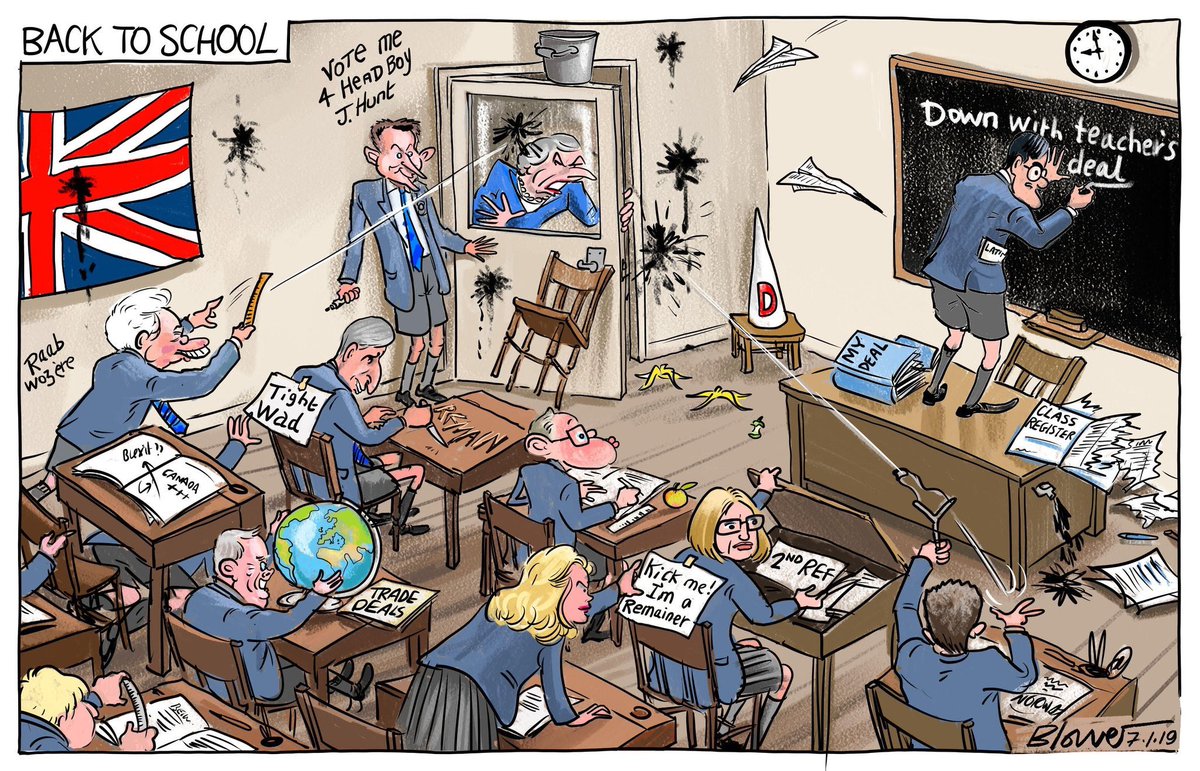
For now, it is a stone too big to swallow, and nobody is quite happy with it. The biggest problem is that there are no clear sides about who wants a hard brexit, who wants to remain and who wants some kind of deal. Each MP has a different opinion about what Brexit should look like, and as long as there is no majority for one, Britain remains in an Impasse. In any case, as the pettifogging spat between remainers and brexiteers goes on, all this struggle in parlament leads to only one, quite obvious conclusion: MPs can’t decide what’s best for their country. And in such a situation, nothing looks more sensible than to ask the people again.
You may say we’ve ‚just‘ had a vote on Brexit and there is no need for another one which will give the same results, that would be an „assault“ to democracy. But to be honest, the actual „assault“ to democracy was the 2016 Referendum itself. The orgy of misinformation and short-sighted arguments misled most of the public into thinking that the UK didn’t need Europe after all. Arguments such as the EU’s cost of 8.5 Billion pounds (0.00324% of Britains GDP, to put into perspective) were louder than the bank’s and industry’s warnings that a no-deal would cut Britain off it’s biggest market. For nobodys surprise, Honda, Land Rover and other car-making enterprises are cutting staff or closing whole factories because of the taxes that would now vigour over exported cars to the EU. And these are just the ‚bigger‘ examples, many other small firms that depend on the european market have no other customers to look for.
It’s not hard to look after examples of companies that will suffer unnecessarily under a hard-Brexit. Take the fishing industry for example: Britain exports £921 millions of fish to the EU every year, and a great share of that fish is actually caught in EU-waters that actually don’t belong to the UK. In the case of Brexit, big importers such as Spain and France would have every reason to impose higher tariffs on fish imports from the UK and demand that British vessels leave EU-waters, of course to protect their own fishing fleets, since in Brexit it’s EU-first, and UK-second.
But remainers insist that we can’t ask the people X times the same question until it gets us the ‚right‘ results, that would undermine peoples honest opinion. Though, we would not be asking the same question in a possible second referendum. In fact, British citizens never said what kind of Brexit they wanted: 52% just said they wanted to leave the EU somehow, wathever they meant with that. Now that we have so many options (deal, no-deal, remain), who can know what the results will be this time? Maybe many hardliners will soften up and go for a deal after they got fired by Honda, or maybe more people would back remain after taking a brake from Boris Johnson’s political misinformation machine… It could also be the opposite. Who knows? But one thing is for sure: the people’s vote would give a clearer signal to London bureaucrats about what is to be done with Brexit, if it should be remain, leave, or something in between. A lot of the fuss that we now see in the house of commons would be spared by a second referendum.
After all, democracy never meant ‚rule of the majority‘, but ‚rule of the people‘. Good politics is made finding common ground between two sides and passing bills that please everybody alike. Though, lately we’ve just seen highly polarized politics with two sides, remain and leave, struggling to get a majority to pass it’s own political agenda. But as none has an actual majority, all they can do is blasphemate one another and blame the prime minister for everything in the end. As long as both sides keep throwing wood into the fire and don’t calm down their expectations, British politics will remain as it is: a big circus for European states to take as an example not to follow. As for the UK, it should get out of the mess it made by same way it got into it: with a referendum. Be prepared for it!
Related links and sources:
https://www.economist.com/open-future/2019/01/14/why-a-second-referendum-is-sensible
https://www.economist.com/britain/2019/02/23/britains-parliament-splinters
https://www.ft.com/content/84f51c84-5fe2-11e7-91a7-502f7ee26895
https://www.ft.com/content/6390db2a-41a2-11e9-b896-fe36ec32aece
 Think Deeper